
What Is Ad-Supported Video On Demand? AVOD Technology Explained
Introduction
Streaming engineers often describe ad-supported video on demand (AVOD) as a simple swap: viewers watch a few ads and get free content. Under the hood, though, an AVOD service behaves more like a tuned broadcast chain than a casual website. Encoder presets, manifest updates, and ad-decision calls all touch both revenue and viewing comfort.
In the US, AVOD viewership is forecast to grow from about 140 million to over 170 million people by 2026. That volume of ad‑backed viewing pushes encoding pipelines, ad workflows, CDNs, and players hard.
This article treats AVOD as an engineering problem rather than a pricing choice. We will walk through delivery workflows, encoding ladders, ad markers, SSAI and CSAI, manifest handling, and CDN design. At Encodebit, we study the video chain end to end, focusing on the technical levers that raise quality and revenue at the same time.
Understanding Ad-Supported Video On Demand: A Technical Definition
By AVOD we mean an OTT model where viewers play content on demand without a subscription, while ads fund the platform. Video is delivered over standard streaming protocols, and ads can appear before, during, or after the program, trading attention for access.
From a systems angle, AVOD sits close to SVOD and TVOD in transport and packaging but adds an extra logic layer. The platform must plan ad breaks, mark them in the content (for example with SCTE‑35), request ads from servers, and stitch those assets into sessions across web, mobile, and living‑room devices.
With US AVOD audiences heading toward 170 million and global revenue in the tens of billions, small technical issues quickly show up in budgets—a reality reinforced by research examining the effect of social media advertising on consumer behavior, which shows how technical execution directly impacts monetization outcomes. Architects track ad impressions per session, completion rates for both content and ads, ad‑pod duration, ad start‑up time, and QoE differences between content and ad breaks.
Compared with a pure subscription model, AVOD brings strict timing and measurement needs. The platform must keep playback smooth while firing tracking pixels, counting impressions, handling beacons, and switching between creative files with different codecs or bitrates, turning AVOD architecture into a distinct engineering challenge.
The AVOD Technical Stack: Stakeholders And Infrastructure

Every AVOD service connects several groups through one technical stack:
- Publishers running the OTT app and streaming platform
- Advertisers and demand‑side platforms sending creative files and bids
- Content owners supplying movies, shows, or clips
- End users watching on many devices and networks
Behind them sits infrastructure that moves segments, manifests, and measurement data in real time.
Publishers need origin storage, packagers, just‑in‑time encoders or pre‑encoded libraries, and one or more CDNs. On top sit ad‑decision servers, user‑data platforms, and analytics pipelines, while advertisers connect through exchanges, SSPs, and DSPs using standards such as VAST and measurement partners add pixels or SDKs.
End users add the final layer of complexity, with viewing patterns and attention metrics playing crucial roles in platform success as highlighted in research on the attention equation and consumer engagement. A single service may support HTML5 players, iOS and Android SDKs, smart‑TV apps, and consoles, each with its own DRM and player stack; a play request can trigger authentication, content lookup, manifest generation, ad‑decision calls, then segment delivery from the closest CDN edge.
Content Sourcing Models And Technical Implications
The way a platform sources its library shapes AVOD workflows. A catalog built around original productions usually starts from mezzanine files under full control, making it easier to define consistent encoding ladders, GOP structures, audio layouts, and planned cue points on clean keyframes—an approach common among the best video on demand platforms that prioritize technical quality.
Licensed content brings more rights and packaging work. Teams handle external DRM packages, windowing rules, and region-specific rights; ingest must accept multiple formats, apply house packaging rules, and track usage by title and region so rights systems can line up with ad‑driven revenue, not just play counts.
User‑generated and crowdsourced libraries create scale issues. The platform may ingest millions of files in different codecs, aspect ratios, and qualities, so automated transcoding, quality checks, and tools that flag problem assets are essential; without normalization at the encoding level, ad insertion and QoE suffer fast.
Ad Insertion Technologies: SSAI Vs. CSAI Deep Dive

In AVOD, ad insertion sits at the heart of the system. Every KPI—fill rate, CPM, completion rate—depends on how ads appear in the stream, and most modern platforms choose between client‑side ad insertion (CSAI) and server‑side ad insertion (SSAI), or mix them, with both relying on clear ad markers such as SCTE‑35.
As one Encodebit engineer likes to say, “Ads are not an overlay on the stream; they are part of the stream.”
In both models the basic flow is similar: a cue is detected, an ad server is queried, a VAST response returns creative options and tracking URLs, and those assets play around the content. The difference is whether that logic runs in the client or on the server.
Client-Side Ad Insertion (CSAI): Architecture And Implementation
With CSAI, most of the intelligence lives in the player or its SDK. The content stream carries markers—timed metadata, SCTE‑35 mapped to ID3, or manifest‑based cues—and when the player hits one, it pauses the program, requests ads, plays them, then resumes playback.
This setup gives the player access to device identifiers, app data, and sometimes cookies, which allows very fine‑grained targeting and detailed reporting. CSAI also suits rich, interactive formats, because JavaScript or native code runs in the same environment as the player and can react instantly to taps or clicks.
The tradeoff is fragility. Each ad call is another network request that can fail or time out, and ad blockers on the web can intercept those calls; pauses for ad loading add latency and raise the risk of buffering right before a break, while content and ads arrive in separate streams that may use very different bitrates.
Server-Side Ad Insertion (SSAI): Architecture And Implementation
SSAI shifts most of the work away from the client. When a user presses play, an SSAI service builds a personalized manifest that already includes content and ad segments in order, reading cue points, calling ad servers, normalizing creatives if needed, and merging everything into a single HLS or DASH manifest.
To support this, the platform needs ad‑decision servers or integrations, transcoding capacity to normalize creative bitrates and codecs, and manifest‑manipulation services that can rewrite playlists on demand. The stitched stream is cached and delivered through CDNs like any other adaptive‑bitrate stream, so the player mainly plays segments and sends tracking events.
SSAI sidesteps most ad blockers because ad segments look just like content segments. Playback is smoother, since the player is not pausing to fetch separate creatives, and ABR ladders plus audio levels can match across ads and content, at the cost of higher server‑side complexity and less direct access to live client data.
This is a major focus area at Encodebit. Getting SSAI right means solid encoding pipelines, consistent segment durations, GOP alignment at ad boundaries, and smart manifest handling at scale, so platform teams can run SSAI workflows that deliver smooth ad breaks without wasting compute or bandwidth.
AVOD Ad Formats And Technical Implementation
AVOD relies on two broad ad groups: in‑stream video ads that interrupt or bookend the program, and visual or interactive units that appear around or on top of the player, each with its own encoding, packaging, viewability, and tracking requirements.
Inside the stream, we see classic pre‑roll, mid‑roll, and post‑roll placements, often grouped into pods. Around the stream, apps may show display banners, companion ads, or interactive overlays that talk to the player through APIs, mostly described using VAST responses and, for richer behavior, interfaces such as VPAID or newer standards.
In-Stream Video Ads: Technical Considerations
Pre‑roll ads are usually the first contact a user has with an AVOD experience, so latency is highly visible; platforms try to preload ad segments early, and encoding specs should match the main content—codec, resolution, frame rate—so quality does not jump at the start, as studies on understanding the effectiveness of video ads demonstrate that technical quality significantly impacts viewer engagement.
Mid‑roll ads depend on accurate cue points. When mapping SCTE‑35 into HLS or DASH, segments and keyframes must align so cuts are clean and ad pods fit the planned duration, or users can see gaps, repeated slates, or hard cuts that feel worse than broadcast‑style breaks.
Post‑roll ads often suffer from drop‑off as viewers close the app once the show ends, but they can still work for short spots or prompts. Across all in‑stream formats, ad bitrate ladders should align with the main program, and audio loudness should stay within standards such as the CALM Act and ITU‑R BS.1770 to avoid harsh volume jumps.
Display, Banner, And Interactive Ads: Technical Integration
Non‑video ads run alongside the stream but still need careful technical design. Display banners may appear above, below, or next to the player, while overlays sit on top of the video; the player and app shell need clean APIs so these elements can show, hide, and resize gracefully across many screen sizes.
Interactive units add another layer. VPAID‑style ads often run JavaScript in a controlled environment, so engineers must think about sandboxing, security, and performance, exposing events such as play, pause, and time updates so interactive elements can stay in sync without slowing video or draining device resources.
Standards such as VAST define media files, tracking events, and companion creatives, while VPAID or successor specs cover richer behavior. Engineering work centers on cross‑device compatibility, controlled CPU and memory use, and performance metrics that reveal whether interactive layers run smoothly or cause slowdowns.
A senior ad‑tech architect once summarized it neatly: “If an ad hurts performance, viewers will blame the player, not the brand.”
Video Encoding And Transcoding For AVOD Platforms

Every AVOD platform stands on its video encoding strategy. Without efficient compression and consistent profiles, ad insertion becomes fragile and bandwidth costs climb, so services need multi‑bitrate ladders that work across many devices and networks while maintaining clean ad boundaries and compatible codecs for both content and ads.
Most AVOD services still rely on H.264/AVC for broad support and often add:
- HEVC (H.265) for 4K and modern TVs
- VP9 in platforms tied to Google technology
- AV1 where device support and compute budgets allow
Codec choices connect directly to transcoding costs, since newer codecs save bandwidth but require more CPU time.
Audio needs the same level of care, with enterprise media management systems helping platforms orchestrate complex transcoding workflows across multiple codecs and formats. Platforms may carry multiple language tracks, descriptive audio, and surround mixes while keeping loudness within agreed standards; transcoding pipelines for user‑generated content must normalize sample rates, channel layouts, and levels automatically, while professional deliveries follow stricter house specs.
At Encodebit, we spend a lot of time on codec tuning, ladder design, and automated validation. Well‑designed transcoding workflows reduce rebuffering, keep ad transitions smooth, and cut delivery costs—“bad encoding is the most expensive bug in streaming,” as our engineers like to say.
Content Delivery And CDN Optimization For AVOD
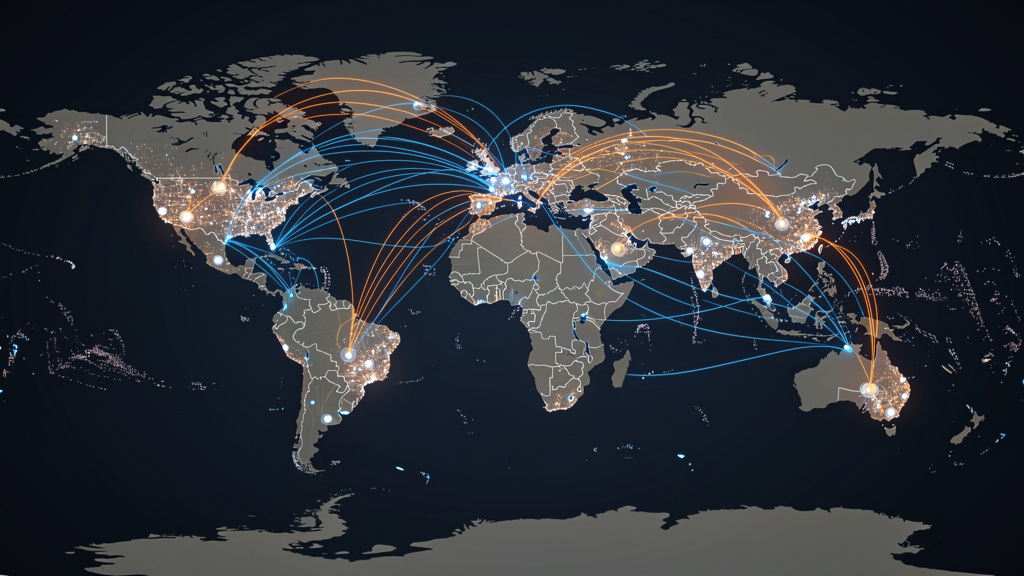
Once content and ads are encoded, the next challenge is delivering them with low latency and high stability. AVOD stresses CDNs because manifests are often personalized and ad segments can see very different cache‑hit rates compared with the underlying content.
A typical AVOD CDN setup combines one or more origins, edge caches near major audience centers, and routing logic that steers users to the best edge. With SSAI, stitched manifests may be generated on the fly, so teams must decide which segments to cache and which to keep dynamic; with CSAI, CDNs mostly handle content while ad files often live on separate ad CDNs.
Low‑latency techniques such as HTTP/2, HTTP/3 over QUIC, and shorter segment durations can help, but they must be balanced against overhead and cache behavior. Many AVOD platforms use multi‑CDN setups, switching between providers by region, ISP, or real‑time performance data while tuning ladders to match real‑world network conditions.
Monitoring is vital. Teams need real‑time metrics on rebuffering, start‑up time, error codes, and bitrates, split between content and ad segments, and Encodebit often emphasizes tying those delivery metrics back to encoding, manifest, and ad‑insertion choices.
As one network engineer put it, “You can’t fix a congested last mile with a new codec alone.”
Comparing AVOD With Other VOD Monetization Models
From a technical angle, AVOD shares most of its streaming stack with other VOD models but adds ad insertion and measurement layers. SVOD platforms focus more on entitlements, DRM, and catalog management; once a user has access, playback is simpler and there is no need for ad markers or impression tracking.
TVOD and PVOD add payment handling and rental or purchase windows. The player must respect license start and end times tied to rights or release strategies, while FAST channels behave like live streams with scheduled programming, EPG data, and continuous playout, even if their ad tools resemble those used in AVOD.
Many services now mix these models, offering both AVOD tiers and subscription options in the same app. That mix requires flexible entitlement systems, configurable manifests, and sometimes different encoding ladders or DRM policies by tier, with the balance between AVOD and SVOD shaped by device mix, infrastructure budget, and ad‑tech maturity.
Key Takeaways
AVOD is more than a billing choice; it is a full technical stack that connects encoding, packaging, ad‑decisioning, client players, and CDNs. Weakness in any part of that chain quickly shows up as lost revenue or frustrated viewers.
CSAI and SSAI each bring different tradeoffs around targeting, ad‑blocker resistance, and playback smoothness. Many services combine both—using SSAI on premium living‑room devices and CSAI where interactive formats and granular targeting matter more—while relying on solid encoding profiles, segment alignment, and careful CDN strategies to hold everything together.
At Encodebit, we view these elements as one continuous problem instead of isolated modules. That perspective helps engineers design AVOD platforms that scale, keep ads and content aligned technically, and use clear measurement to guide future improvements.
Conclusion
Ad-supported video on demand now sits at the center of streaming growth, but its success depends on careful technical design. Encoding choices, multi‑bitrate ladders, ad markers, SSAI and CSAI workflows, and CDN planning all affect both viewer experience and advertising revenue; when those parts line up, platforms can offer free content at scale while keeping sessions smooth and reliable.
The field keeps moving. New codecs such as AV1, smarter recommendation systems, and more advanced targeting methods are reshaping how AVOD sessions are built and tuned, and engineering teams need detailed, practical information rather than marketing slogans—a gap we aim to fill at Encodebit.
If you are building or tuning an AVOD platform, staying current on encoding standards, OTT workflows, ad tech, and delivery methods is no longer optional. We invite you to explore more of Encodebit’s technical articles on video encoding, encryption, multiplexing, and streaming architectures so you can design services ready for the next wave of ad‑supported growth.
FAQs
Question 1: What Is The Difference Between AVOD And FAST From A Technical Perspective?
AVOD uses an on‑demand architecture: a viewer selects a title, the platform builds a manifest for that session, and ad‑insertion decisions can be personalized in real time, with storage optimized for random access to many titles.
FAST channels behave more like live streams. The backend maintains linear playlists and EPG data, and ad breaks are usually planned as part of that schedule; the origin looks like a live origin, and session manifests follow an ongoing channel rather than a single on‑demand asset.
Question 2: Which Ad Insertion Method Is Better For AVOD Platforms: CSAI Or SSAI?
There is no single best choice. SSAI usually gives a smoother, more TV‑like experience, avoids most ad blockers, and keeps client logic simple, though it needs more server‑side infrastructure, while CSAI offers stronger device‑level control and easier support for interactive formats but is more exposed to blockers and ad‑call failures.
Many platforms use a hybrid approach: SSAI for premium living‑room screens where smooth playback matters most, and CSAI where interactive features and granular targeting bring more value, with device detection and feature flags guiding which mode is used per session.
Question 3: What Video Codecs Are Most Commonly Used In AVOD Platforms?
H.264 (AVC) remains the most common codec in AVOD because it plays on almost every relevant device. HEVC (H.265) is widely used for 4K streams and bandwidth savings on newer TVs and mobile devices, while VP9 often appears in platforms tied to Google technology, and AV1 is gaining ground as a royalty‑free option with strong compression gains.
The right mix depends on device base, licensing concerns, encoder performance, and how much extra complexity the platform can accept in its transcoding farm. Many services run mixed ladders, offering H.264 as a baseline and adding newer codecs where client support and business rules allow.
Question 4: How Does AVOD Monetization Compare To SVOD From A Revenue Perspective?
AVOD revenue depends on ad impressions, CPM rates, fill rates, and viewing time. That makes income more variable and more sensitive to ad‑market swings, but it also opens access to very large audiences who prefer free viewing, while SVOD revenue comes from recurring payments and is often easier to forecast but demands long‑term content investment to limit churn.
Many services now blend the two, adding AVOD tiers to subscription offerings. In that mixed model, engineering investment shifts: AVOD parts of the platform need advanced ad tech, detailed measurement, and efficient encoding for large audiences, while SVOD areas focus more on access control, DRM, and premium presentation.